
Why Does a Child Have Leg Pain at Night? Causes, Symptoms and When to Worry
October 6, 2026
When Does an Ankle Ligament Tear Require Surgery?
October 20, 2026
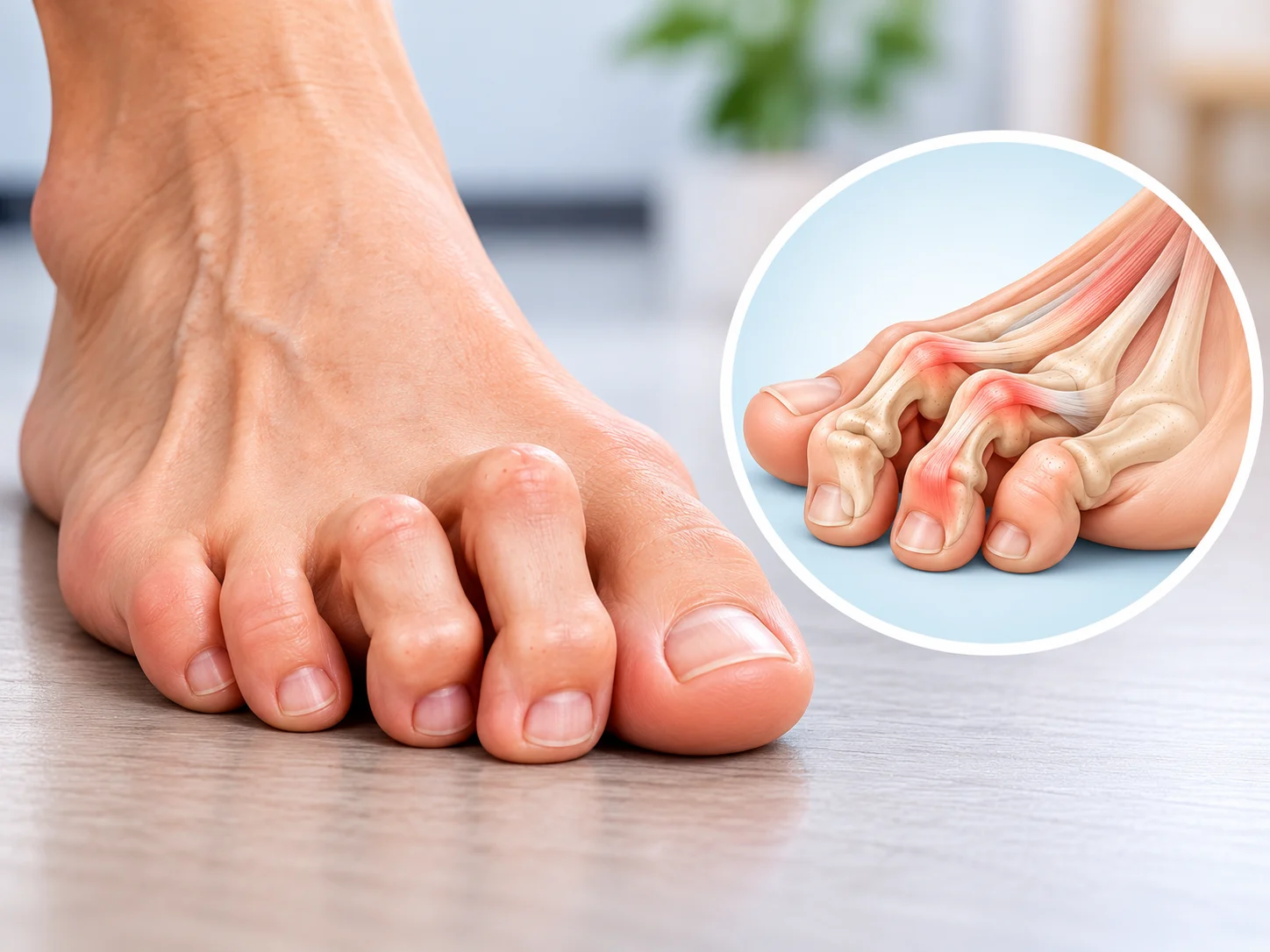
What causes claw toes? Small foot muscles weaken, and long tendons pull the toes into a curl. Common causes include nerve damage from diabetes, nerve or muscle conditions, high arches, arthritis and past injury. Care starts with roomy shoes, pads, splints and exercises. Surgery helps when a toe turns stiff and painful.
You slip off your work shoes after a long day. There’s a red, sore patch on top of two toes. Then you see those toes no longer lie flat.
The key question is what causes claw toes in your foot. The answer shapes every care choice.
Here are the main causes, the signs to act on, and the claw toe treatment options at OrthofootMD in Singapore.
What Causes Claw Toes?
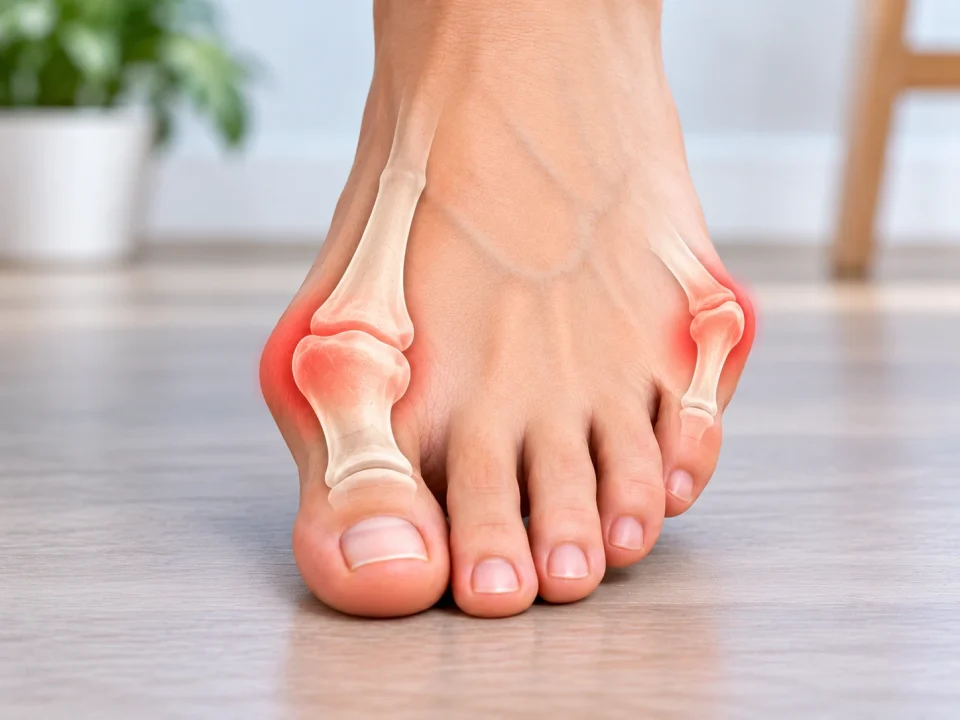
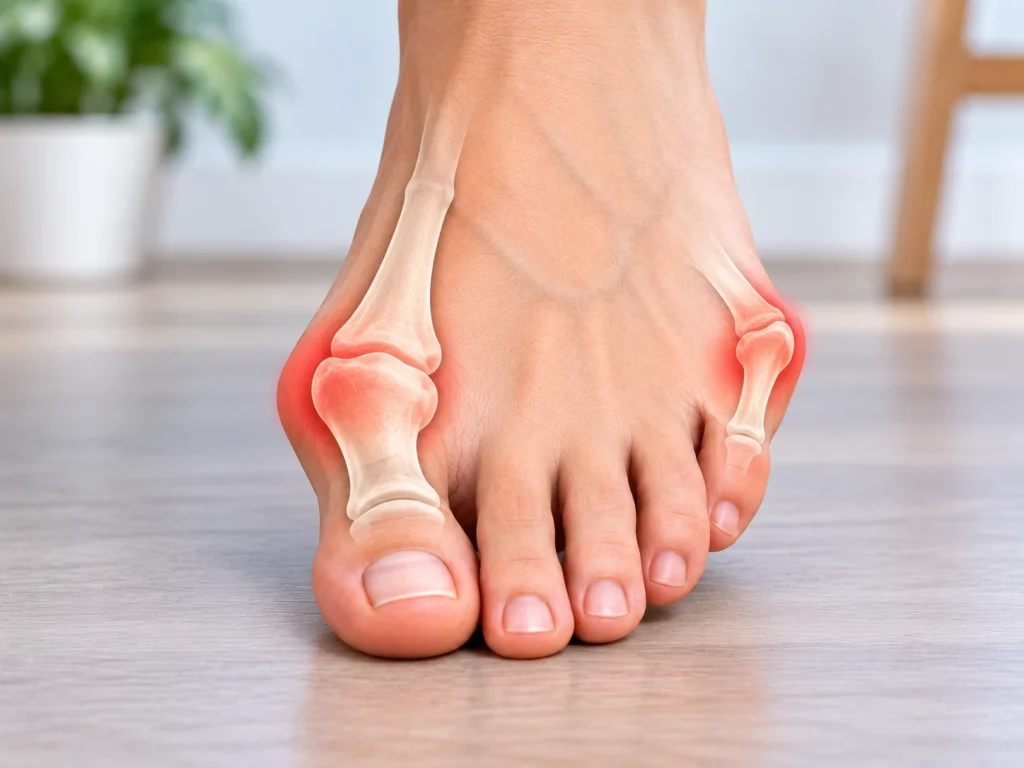
Claw toes form when the muscles that keep a toe straight fall out of balance. Small muscles inside the foot hold each toe flat and steady. When they weaken, longer tendons from the lower leg take over. They pull the toe up at its base and down at the middle and tip joints.
The result looks like a bird’s claw. It tends to affect the second to fifth toes, often several at once. A curl across many toes hints at a cause that affects the whole foot.
Five Common Claw Toe Causes
Claw toe causes fall into five groups. Some start in the foot. Others begin in the nerves, spine or leg.
1. Nerve damage, including diabetes
Peripheral neuropathy is nerve damage in the feet. It weakens small foot muscles and can dull feeling. Diabetes is a well-known cause.
This link matters in Singapore, where the Ministry of Health declared a “War on Diabetes” in 2016. Diabetic foot care is a core focus at OrthofootMD. Anyone with diabetes should get new toe curling checked.
2. Nerve and muscle conditions
Problems in the brain, spine or nerves can upset toe balance. Examples include stroke, a pinched nerve in the lower back, and Charcot-Marie-Tooth disease (an inherited nerve condition). These causes often affect both feet.
3. High-arched feet
A high arch (cavus foot) puts extra weight on the ball of the foot. Over time, this changes how the toe tendons pull. High arches can run in families.
4. Inflammatory arthritis
Rheumatoid arthritis can damage the joints at the base of the toes. As those joints weaken and shift, the toes drift into a curl.
5. Injury to the leg, ankle or foot
This one often surprises people. A bad leg or ankle fracture can lead to curled toes months later.
One reason is compartment syndrome. Swelling inside the leg builds pressure and harms the muscle, which can then scar and shorten. Scar tissue after a fracture can also catch a toe tendon, so the toes curl when the ankle moves.
As a triple-fellowship-trained orthopaedic and trauma surgeon, Dr Gowreeson Thevendran reviews this whole chain: foot, ankle, leg and spine.
Where do shoes fit in? Tight shoes and high heels mainly make things worse. A cramped toe box rubs the raised joints and can speed up stiffness.
What Your Toe Pattern Can Tell You: A Four-Question Check
The curl itself gives clues about its cause. These four questions reflect what a foot and ankle assessment checks first.
| Question | What you notice | What it may point to |
| How many toes? | One toe | A local cause, such as an old injury |
| Several toes | A whole-foot cause, such as nerve or muscle imbalance | |
| One foot or both? | One foot | Past injury, arthritis or a nerve issue on that side |
| Both feet | A body-wide cause, such as diabetes | |
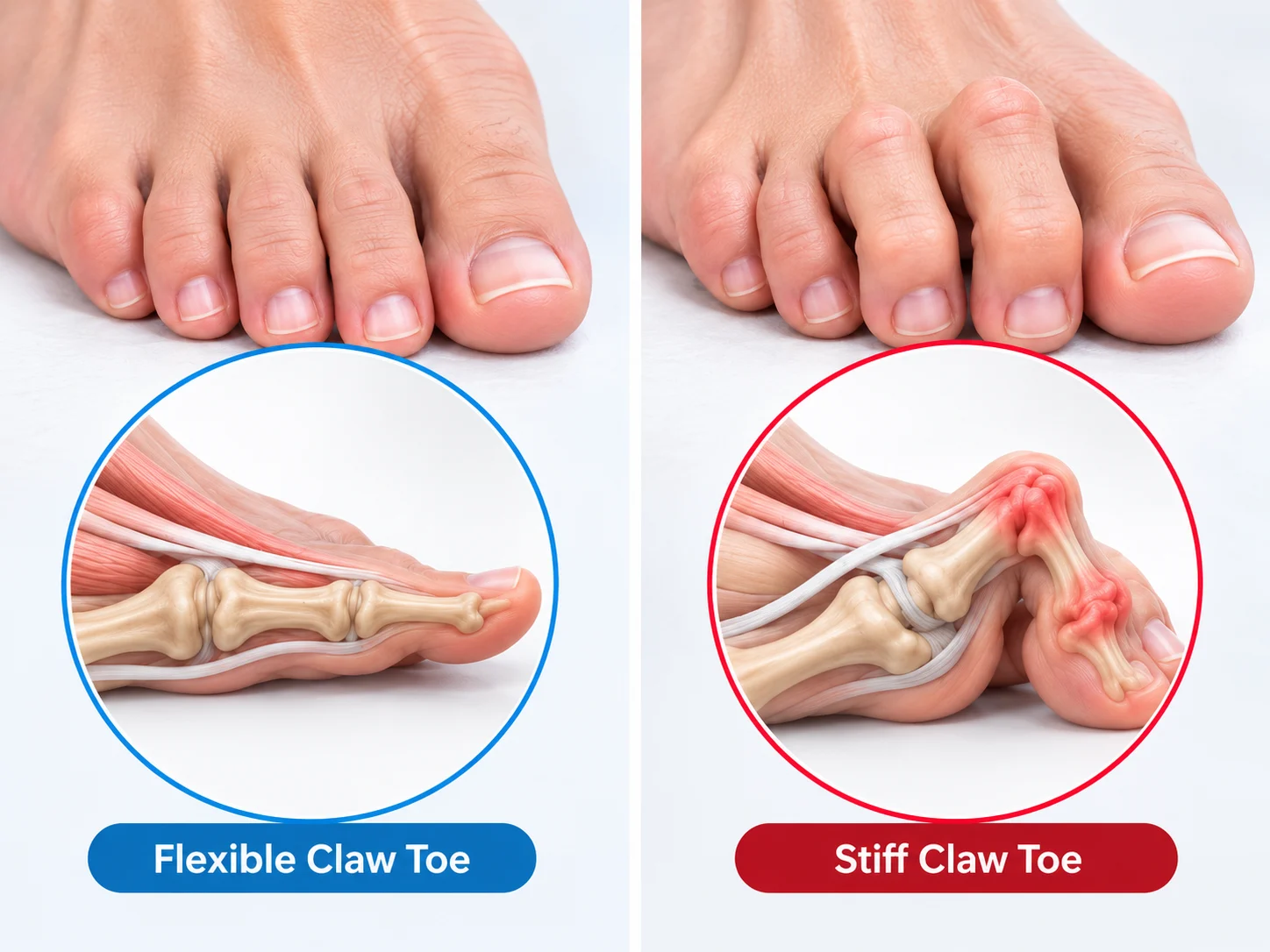
| Flexible or stiff? | Straightens with gentle pressure | An earlier stage; non-surgical care often helps |
| Stays curled | A later stage; surgery may be needed | |
| Numbness or tingling? | Yes | Possible nerve involvement; see a doctor soon |
Use this check to start a talk with your doctor. A firm diagnosis needs your history, an exam and imaging such as X-rays taken while standing.
Why Claw Toes Cause Pain on Top of Toes and under the Foot
The curl changes where pressure lands. The raised middle joint rubs the roof of your shoe. That rubbing causes pain on top of toes and often a hard corn.
The curl also drags the fat pad under the ball of the foot forward. The bones there lose cushioning. Walking can feel like stepping on pebbles.
Left alone, a claw toe deformity can lead to:
- Corns on top of the toes and on the tips
- Calluses and aching under the ball of the foot
- Toes that grow stiffer and harder to fit into shoes
- Skin sores and ulcers, mainly where diabetes has reduced feeling
If you have diabetes, that last risk is a reason to act fast.
When Claw Toes Need Prompt Care
Some changes need a doctor’s attention quickly. See your doctor promptly if you notice:
- An open sore, blister or cut on a curled toe
- Redness, warmth or swelling that is spreading
- Pus, a bad smell or a fever
- A toe that turns pale, blue or dark
Sudden weakness in a leg or foot needs emergency care, especially with a drooping face or slurred speech. In Singapore, call 995.
A Daily Foot Check for People with Diabetes
Reduced feeling means a sore can go unnoticed for days. A quick daily check helps you catch problems early.
Reduced feeling means a sore can go unnoticed for days. A quick daily check helps you catch problems early. Following appropriate foot care practices for people with diabetes is especially important because nerve damage can make it harder to notice cuts, blisters and pressure sores.
- Look at the tops, tips and soles of your toes in good light. Use a mirror, or ask a family member to check your soles.
- Check between your toes for cracks or damp, white skin.
- Run your hand inside each shoe before you put it on.
- Note any new corn, colour change or swelling, and show your doctor.
- Leave corns to a professional. Blades and medicated corn plasters can damage fragile skin.
Claw Toe Treatment: Matching the Fix to the Cause
Good treatment for claw toes eases the toe and manages the cause. Early, flexible curls often respond to simple steps.
Footwear, padding and a claw toe splint
- Choose shoes with a deep, wide toe box and soft uppers.
- Keep heels low to ease pressure on the ball of the foot.
- Protect raised joints with gel toe sleeves or corn pads.
- Support the ball of the foot with a metatarsal pad.
- Hold flexible toes straighter with a claw toe splint, toe crest or strapping.
A splint works best while the toe still bends. Once it stiffens, a splint mainly adds comfort.
Claw toe exercises
These claw toe exercises build the small foot muscles and keep joints supple:
- Towel scrunches. Rest your foot on a towel and pull it towards you with your toes.
- Marble pick-ups. Lift marbles one at a time with your toes and drop them in a cup.
- Toe spreads. Spread your toes wide, hold briefly, then relax.
- Gentle stretches. Ease each curled toe straight with your hand. Hold for a few slow breaths.
If you have diabetes or numb feet, check with your doctor first. Stop any exercise that hurts.
Treating the underlying cause
Your plan may include blood sugar control, nerve tests or arthritis care. Your GP or another specialist may also be involved.
Living with Claw Toes: A Lifestyle Guide
Your daily routine shapes how claw toes feel. Small changes suited to your day can ease pressure and slow stiffness.
Office days
Swap pointed or high-heeled shoes for a low heel with a deep, rounded toe box. If you commute in trainers, keep a roomy pair of work shoes at your desk.
On your feet all day
Nurses, retail staff and hospitality workers spend long hours standing. Choose cushioned, supportive work shoes and add a metatarsal pad. In Singapore’s humidity, change damp socks during the day, since moist skin rubs and breaks down more easily.
Runners and walkers
Check that your toes have space at the front of your running shoes, especially for downhill stretches. Lacing that holds your heel snug helps keep the foot from sliding forward.
Slippers and sandals
Flip-flops are everyday wear in Singapore’s heat. Your toes grip to keep them on, and that gripping can add to the curl. Sandals with a back strap let your toes relax.
A shoe-shopping checklist
- Shop later in the day, when your feet are at their largest.
- Leave about a thumb’s width between your longest toe and the end of the shoe.
- Make sure curled toes have room above them in the toe box.
- Feel inside for seams that sit over your toe joints.
- Bring your pads or splint to the fitting.
When Claw Toe Surgery Becomes the Right Step
Claw toe surgery is worth discussing when a toe stays painful, keeps forming corns or sores, or has stiffened despite good non-surgical care.
Claw toe surgery is worth discussing when a toe stays painful, keeps forming corns or sores, or has stiffened despite good non-surgical care. A specialist assessment for hammer toe and claw toe treatment can help determine whether continued conservative care or surgery is appropriate for your condition.
The type of claw toe correction depends on how flexible the toe is and which joints are involved. Options include:
- Lengthening or releasing a tight tendon
- Moving a tendon so it helps hold the toe straight
- Straightening or fusing a stiff middle joint
- Freeing the tight joint at the base of the toe, sometimes with a small bone cut to realign it
Where suitable, keyhole (minimally invasive) methods use small cuts, which can mean smaller scars. Dr Gowreeson will explain whether this suits your foot.
Recovery depends on the procedure and how many toes are treated. A temporary pin often holds the toe straight as it heals, and a stiff-soled shoe protects it. Swelling can take months to settle. You’ll get a personal recovery plan before surgery.
Getting Clear Answers on What Causes Claw Toes in Your Foot
Curled toes can signal nerve, muscle or joint changes worth catching early. Knowing what causes claw toes in your foot helps you pick the right care. Acting early keeps more options open.
Dr Gowreeson Thevendran sees patients at Mount Alvernia Hospital and Mount Elizabeth Novena Specialist Centre in Singapore. His assessment covers your toes, your shoes, your health history and the activities you want to return to.
FAQs
Claw toe and hammer toe look alike but affect different joints. Hammer toe bends one toe down at the middle joint. Claw toe bends the toe up at its base and down at the middle and tip joints, and it often affects several toes at once.
Yes. Claw toes are sometimes one of the first visible signs of peripheral neuropathy, including nerve damage from diabetes. Curling across several toes on both feet is a pattern worth checking.
Claw toes in one foot often point to a cause on that side. Common examples include an old fracture, a past ankle or leg injury, arthritis in one foot, or a nerve problem affecting one leg. Mention any previous injury at your appointment, even if it happened years ago.
Claw toes usually progress slowly over time. A toe that straightens easily today can stiffen in a fixed curl over months or years. Early care, such as roomy shoes, splints and exercises, works best while the toe is still flexible. Managing the underlying cause also helps slow the change.
A claw toe splint holds a flexible toe in a straighter position while you wear it, which eases rubbing and pain. Lasting improvement depends on treating the cause and strengthening the small foot muscles. For a toe that has already stiffened, a splint mainly adds comfort.
Surgery becomes worth discussing when pain, corns or sores keep returning despite good shoes, padding and exercises, or when a toe has become stiff.
Many patients can walk soon after claw toe surgery, usually in a stiff-soled protective shoe. How much weight you can place on your foot depends on the procedure and how many toes were treated.
Surgery aims to leave the toe straighter and more comfortable in shoes. Some swelling can last for several months. After a joint fusion, the toe stays straight but no longer bends at that joint, which usually has little effect on walking.
Some claw toes can be prevented, and others can be slowed. Wearing shoes with a deep, wide toe box, managing diabetes and arthritis, and checking new toe curling early all help. Inherited causes, such as some high-arched feet, are harder to prevent but respond well to early care.