
How Long Does an Ankle Sprain Take to Heal? Recovery Timeline and Tips
September 22, 2026
Why Does a Child Have Leg Pain at Night? Causes, Symptoms and When to Worry
October 6, 2026
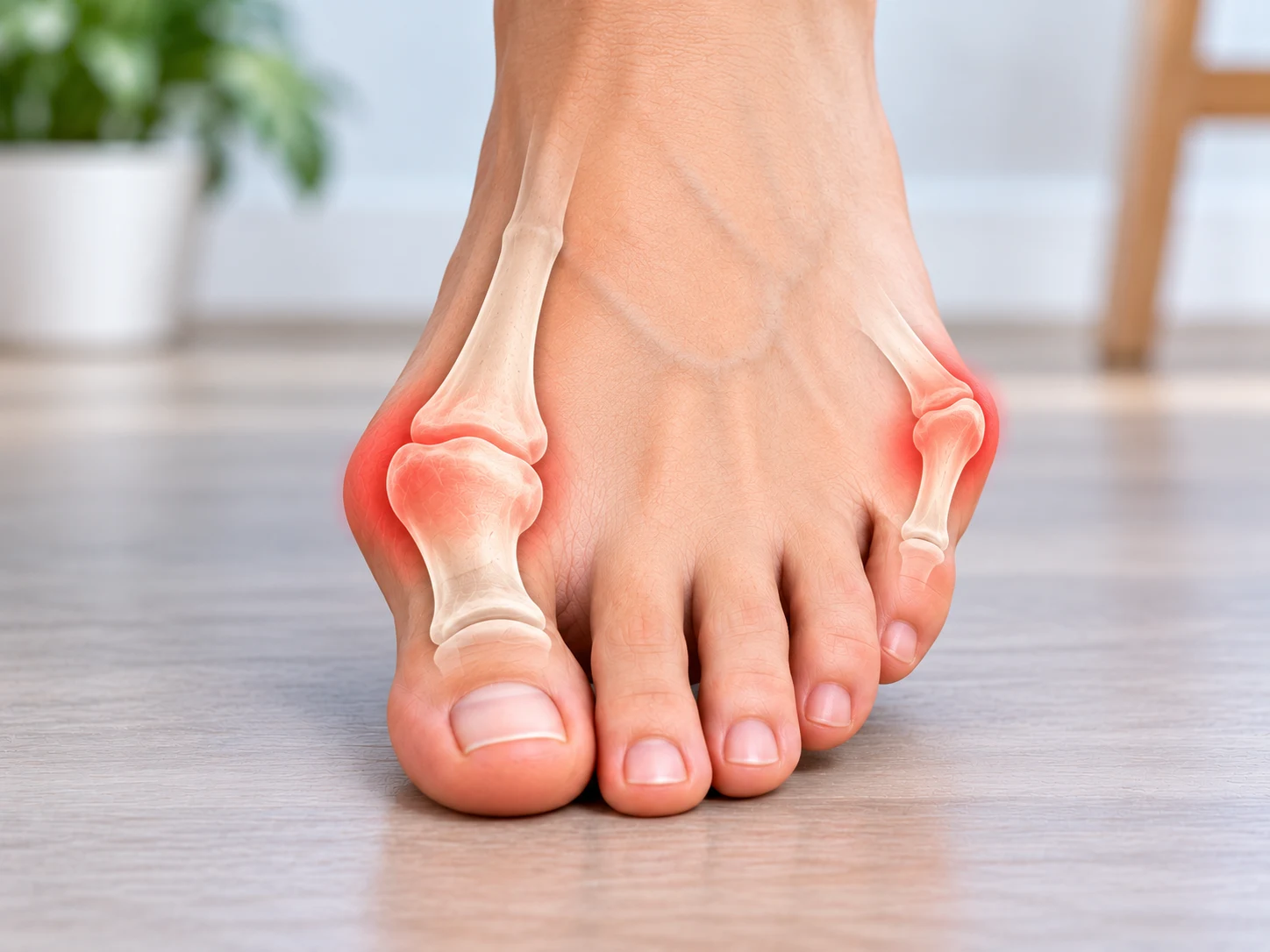
A bump forms on your foot. It’s sore, it rubs against your shoes, and it’s slowly changing the shape of your foot. But which bump is it?
Most people call any foot bump a “bunion”. That’s not quite right. There’s a smaller, less-known cousin called a bunionette, or tailor’s bunion. It behaves differently, sits in a different spot, and sometimes needs a different treatment plan.
Getting the diagnosis right matters. It changes your footwear choices, your treatment options, and how soon you should see a specialist.
What Is a Bunion?
A bunion is a bony bump that forms at the base of your big toe. It’s the most common bunion deformity orthopaedic surgeons see.
Here’s what actually happens. The big toe joint gradually shifts out of alignment. The big toe leans towards your second toe. The joint at its base pushes outward, forming a visible bump on the inside edge of your foot.
This is a big toe bunion, medically known as hallux valgus. It tends to develop slowly, often over years, and it rarely resolves on its own.
Common signs include:
- A firm bump on the side of your big toe joint
- Redness or swelling around the joint
- Stiffness when you try to move the toe
- Pain that worsens in narrow or pointed shoes
What Is a Bunionette (Tailor's Bunion)?
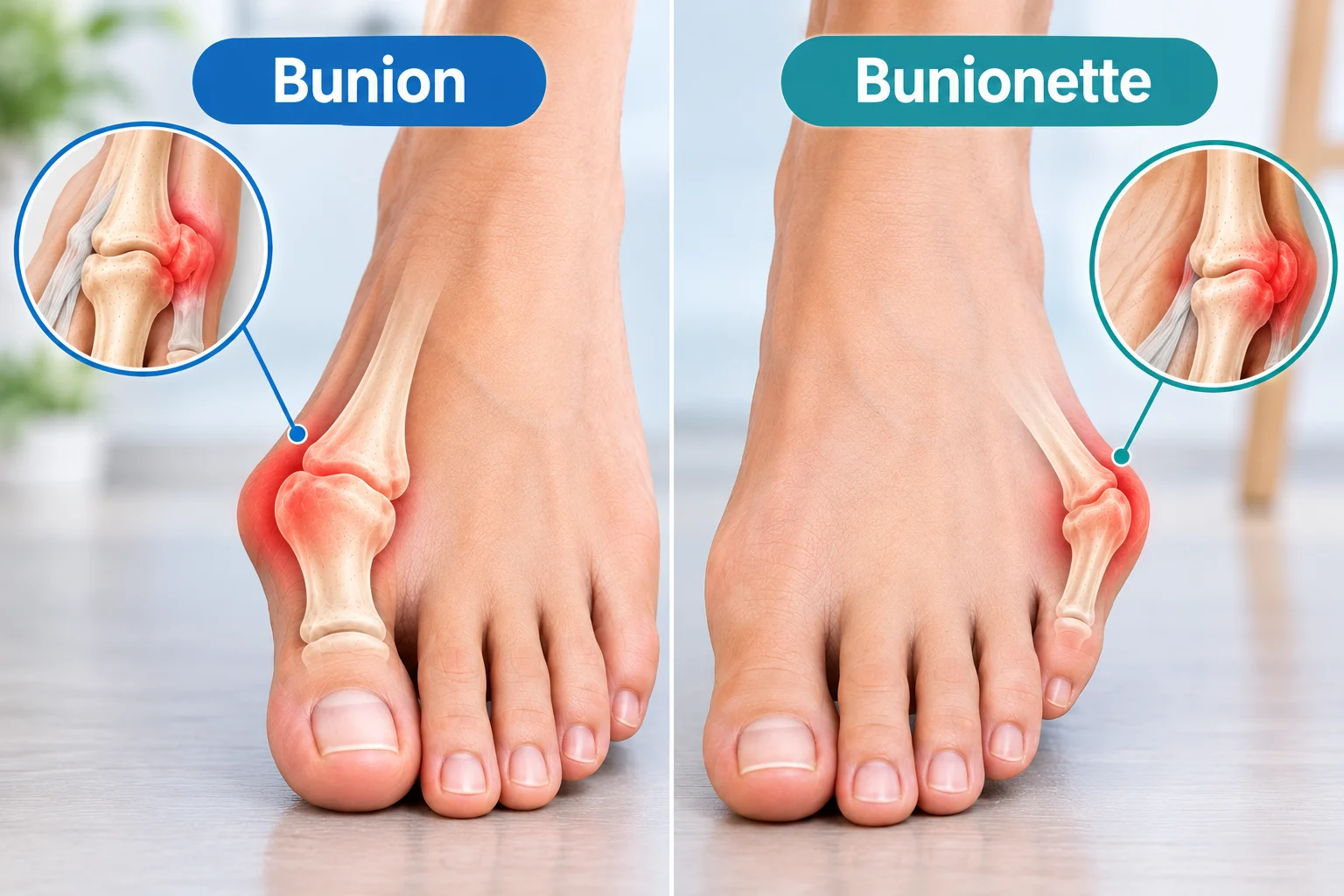
So, what is a bunionette? It’s essentially a bunion’s smaller relative, but on the opposite side of the foot.
A bunionette forms at the base of your little toe, where the fifth metatarsal bone meets the toe joint. The bone shifts outward, and the little toe often angles inward. The result is a bump on the outside edge of your foot.
The name “tailor’s bunion” has an interesting origin. Tailors once sat cross-legged for long hours, with the outer edges of their feet pressed against the ground. That repeated pressure was thought to cause this specific deformity, and the name stuck.
A tailor’s bunion is less common than a standard bunion. But it causes the same core problem: a painful, prominent bump that clashes with your shoes.
Key Differences at a Glance
| Point to note | Bunion | Bunionette (Tailor’s Bunion) |
| Location | Base of the big toe | Base of the little toe |
| Bump position | Inside edge of the foot | Outside edge of the foot |
| Toe affected | Big toe drifts inward | Little toe drifts inward |
| Prevalence | More common | Less common |
| Footwear trigger | Narrow, pointed toe boxes | Tight or narrow shoe width |
Same underlying mechanism. Different location. That’s really the simplest way to remember it.
How Can You Tell Which One You Have?
Start with a simple check. Where is the bump?
If it’s on the inside of your foot, near your big toe, you’re likely dealing with a standard bunion. If it’s on the outside, near your little toe, a bunionette is the more likely cause.
Watch for these bunion symptoms on either side of the foot:
- A visible bump that’s grown gradually
- Pain when wearing certain shoes
- Skin irritation or a corn over the bump
- Occasional swelling after a long day on your feet
A bump on your big toe and a bump on the side of your foot near the little toe can look deceptively similar in the mirror. This is exactly the kind of case where a physical exam and, if needed, an X-ray gives you a clear answer. Self-diagnosis from a photo online isn’t reliable enough to base treatment decisions on.
Causes and Contributing Factors
Bunion causes are rarely just one thing. It’s usually a combination of factors working together over time.
Foot structure and genetics:
Some people are simply born with foot mechanics that put more strain on these joints. If bunions run in your family, your risk is higher.
Footwear choices:
Narrow, pointed, or high-heeled shoes don’t cause a bunion deformity by themselves, but they do speed things up and worsen existing pressure points.
Foot mechanics:
How your foot rolls and bears weight while walking plays a role. Flat feet or an unstable arch can shift extra load onto the outer or inner edge of the foot.
Wear and repetitive pressure:
Standing, walking, or specific occupational postures that repeatedly stress one part of the foot can contribute, particularly for a tailor’s bunion.
Can You Have Both?
Yes. It’s entirely possible to have a bunion on one side of your foot and a bunionette on the other, at the same time.
This isn’t rare. Some foot structures and gait patterns put pressure on both joints simultaneously. When this happens, treatment needs to consider the whole foot, not just one bump in isolation.
Treatment Differences
Bunion treatment and bunionette treatment share the same starting point: manage the symptoms before considering surgery.
Non-surgical approaches work well for many people in the earlier stages. Bunion treatment without surgery typically includes:
- Switching to wider, low-heeled shoes with a roomier toe box
- Custom or off-the-shelf orthotic inserts to redistribute pressure
- Padding or toe spacers to reduce friction on the bump
- Anti-inflammatory measures for flare-ups
- Activity adjustments to reduce repetitive pressure
These steps ease pain and slow progression. They don’t reverse the underlying bone shift.
When conservative care isn’t enough, surgical bunion treatment options come into the conversation. The right procedure depends on the severity of the deformity, your activity level, and how much the joint has shifted. In selected cases, keyhole bunion surgery may be considered as a minimally invasive approach to correcting the deformity.
A bunionette often responds to a smaller, more localised correction than a full bunion procedure, since the deformity is usually less advanced by the time it’s addressed.
When to See a Specialist
See a specialist if the bump is growing, if pain is limiting your activity, or if your usual shoes no longer fit comfortably. Early assessment gives you more non-surgical options, not fewer.
It’s also worth getting checked if you notice:
- Pain that persists despite shoe changes
- A bump that’s changed shape or size recently
- Numbness or tingling in the affected toe
- Difficulty finding shoes that don’t cause pain
A foot and ankle specialist can confirm which deformity you’re dealing with and rule out other causes of foot pain that can look similar on the surface.
When Surgery May Be Considered
Surgery becomes a realistic option when non-surgical care has been genuinely tried and pain still limits your daily life. It’s also considered when the deformity is progressing quickly, or when the joint has shifted enough to affect nearby toes. Understanding when bunion surgery may be necessary can help you recognise when conservative treatment may no longer be enough.
This is a personal decision, made jointly with your surgeon, based on your specific foot structure and goals. Dr. Gowreeson Thevendran favours minimally invasive, “keyhole” techniques where a patient’s case is suitable, aiming for smaller incisions and a more comfortable recovery path compared with older open approaches. Whether that applies to your case depends entirely on your individual assessment.
Getting the Right Diagnosis and the Right Plan
A bunion and a bunionette look similar at first glance, but they sit in different parts of the foot and can call for different treatment paths. The clearest way to know which one you have, and what to do about it, is a proper assessment.
If you’re dealing with a painful bump on your foot, whether near your big toe or your little toe, schedule an assessment with our foot, ankle, and knee specialist at OrthofootMD to get a clear diagnosis and a treatment plan built around your foot. For a bunion affecting the big toe joint, bunion surgery may be considered when the pain and deformity persist despite non-surgical treatment.
FAQs
No. Both are bony bumps caused by a shifting toe joint, but a bunion forms at the base of the big toe and a bunionette forms at the base of the little toe, on the opposite edge of the foot.
A tailor’s bunion usually develops from a mix of factors: inherited foot structure, footwear that’s too narrow, foot mechanics that shift extra pressure to the outer edge of the foot, and repetitive pressure from standing or walking. It’s rarely down to one cause alone.
Yes. It’s entirely possible to have both, since some foot structures and gait patterns put pressure on both the big toe and little toe joints at once. When this happens, treatment needs to address the whole foot rather than one bump on its own.
Non-surgical care such as wider shoes, orthotic inserts, and padding can ease pain and slow progression, but it won’t reverse the bone shift itself. Surgery is only considered if conservative care hasn’t controlled symptoms.
Both tend to develop gradually and rarely resolve on their own. They can continue to progress over time, which is why an earlier assessment usually means more non-surgical options are still available, not fewer.
Look for wider, low-heeled shoes with a roomier toe box that doesn’t press on the bump. Avoid narrow, pointed, or tight-fitting shoes, since these are the footwear styles most likely to worsen either condition.