
Shoulder Pain When Raising Arm Causes Relief and Recovery
November 3, 2026
When Is ORIF Surgery Needed for an Ankle Fracture, and What Does Recovery Involve?
November 17, 2026
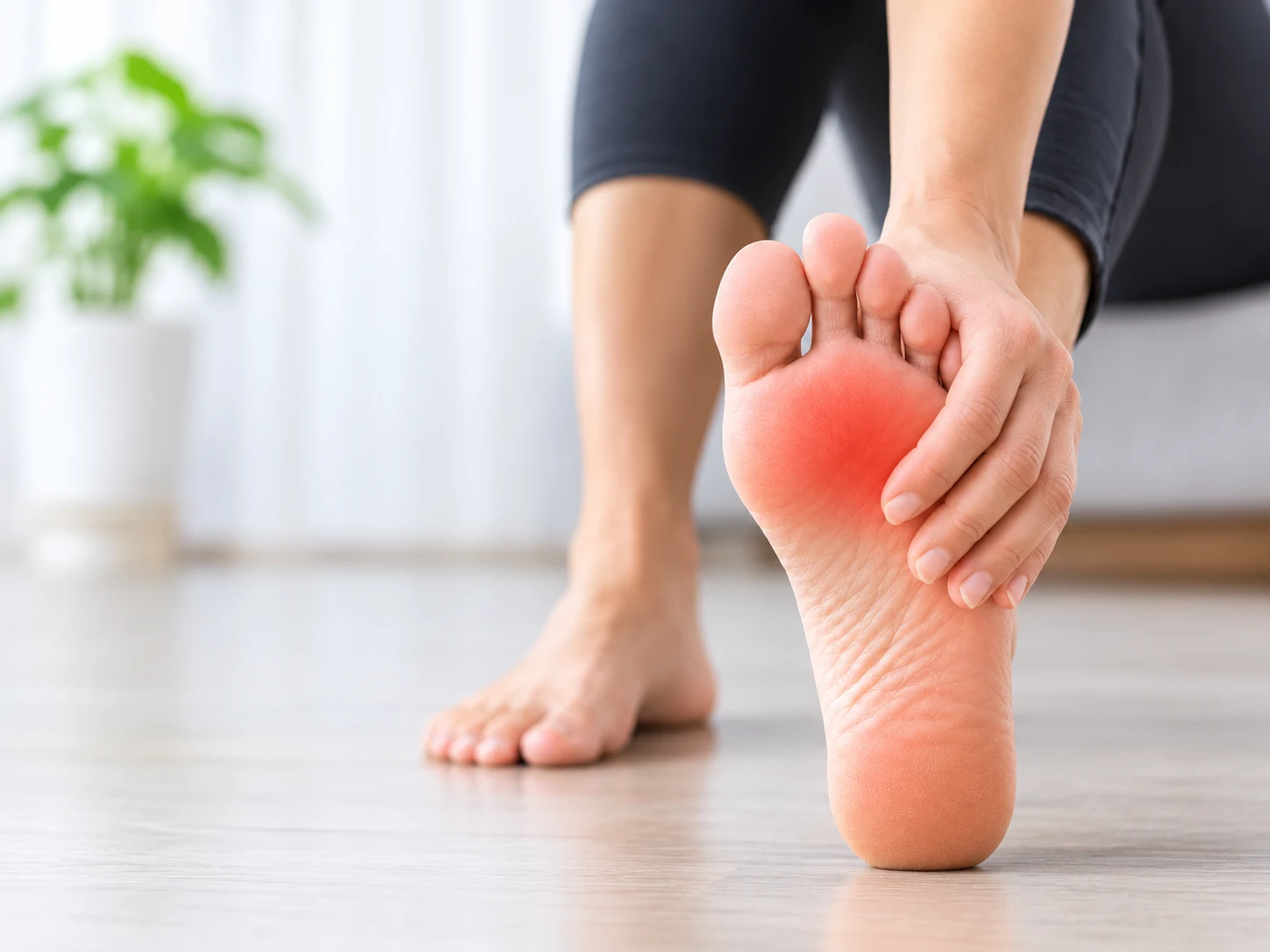
Let us show you a scenario and ask you to give your input. Assume it’s the middle of the night and you’re typing something on your phone. “It feels like a rock under my foot, turning behind my toes.” “Pain in the ball of my foot, but I never harmed it.”
You have a ball of foot pain, and nobody has given it a name yet. Doctors call it metatarsalgia: pain under the metatarsal heads, the bony knuckles just behind your toes. It starts when too much pressure lands on that small area, and the exact cause changes the treatment.
Five ways people describe ball of foot pain and what each one points to
Your own description is the best clue you have. Find the line that sounds like you.
“It feels like a pebble in my shoe.”
A pebble or a bunched-up sock under the forefoot is the classic picture. Spread across several toe joints, it usually reflects general overload and a thinning fat pad. Concentrated between the third and fourth toes, with tingling, it raises the question of Morton’s neuroma (an irritated nerve).
“It burns, tingles or goes numb.”
Burning, pins and needles, or numb toes point toward a nerve. Tight shoes squeeze the nerve, so relief often arrives when you slip them off. Numbness across several toes on both feet is a different story. Diabetes and other conditions can affect feeling, so that pattern deserves a medical review.
“It is sharp under my second toe, and the toe is drifting.”
Pain under the second toe joint, with swelling and a toe that slowly lifts or drifts sideways, suggests a plantar plate tear. The plantar plate is a thick ligament under the toe joint that holds the toe steady. Early assessment matters here, because toe position can change over time.
“It hurts under my big toe when I push off.”
Pain beneath the big toe joint, worst at push-off or in heels, often involves the two small sesamoid bones under that joint. They sit inside a tendon and can become inflamed.
“It built up with my running, and I can point to one spot.”
A single tender spot that grows with training, sometimes with swelling on top of the foot, can signal a metatarsal stress fracture. Pause impact sport and get it checked, since running on a stress fracture can make it worse.
These metatarsalgia symptoms overlap, which is why a physical examination matters. If none of the five fits, general overload is the usual answer.
Why the front of your foot is overloaded
Sensation tells you where to look. Shape and shoe tell you why. Three checks take a few minutes tonight and need no equipment.
Your calf.
Face a wall with your toes about a hand’s width away. Bend one knee forward until it touches the wall, heel down. Repeat on the other side. A calf that stops early forces the forefoot to take extra load, so many metatarsalgia causes begin in the calf. Restricted ankle movement can therefore contribute to forefoot discomfort, and tight calf muscles may need attention as part of managing the pressure on the ball of your foot.
Your toes and arch.
Stand barefoot and look down. A bunion, a hammer toe, a claw toe or a toe that has stopped touching the floor means a toe has stopped sharing its load. The neighbouring metatarsal heads pick up the slack. A very high arch or a flat foot can also push weight forward. When a bunion contributes to this pressure imbalance, suitable footwear and bunion pain relief measures may help reduce discomfort around the affected toe joint.
Your shoes and floors.
Pull out the insole. A worn, flattened patch under the ball shows where your pressure lands. Thin soles, high heels and narrow toe boxes concentrate it. In Singapore, tiled floors at home, thin slippers and long hours on concrete at malls and hawker centres add up.
Extra body weight and sudden jumps in running distance raise the load further. If you have diabetes, new forefoot pain deserves an early review, because reduced feeling can delay pain signals.
Metatarsalgia treatment: a sensible first fortnight
When no warning signs are present, metatarsalgia treatment can begin at home. Swap running or jumping for cycling or swimming. Ice the area for about 10 minutes if it feels hot or sore. Add a cushioned insole, or place a metatarsal pad just behind the sore spot so it spreads pressure away from it.
Choose shoes with a thick cushioned sole, a wide toe box and a low heel. Retire running shoes that have lost their spring. Then add the exercises below. Simple pain relievers can ease flare-ups. Check with your doctor or pharmacist first if you have kidney, stomach or heart conditions, or take blood thinners.
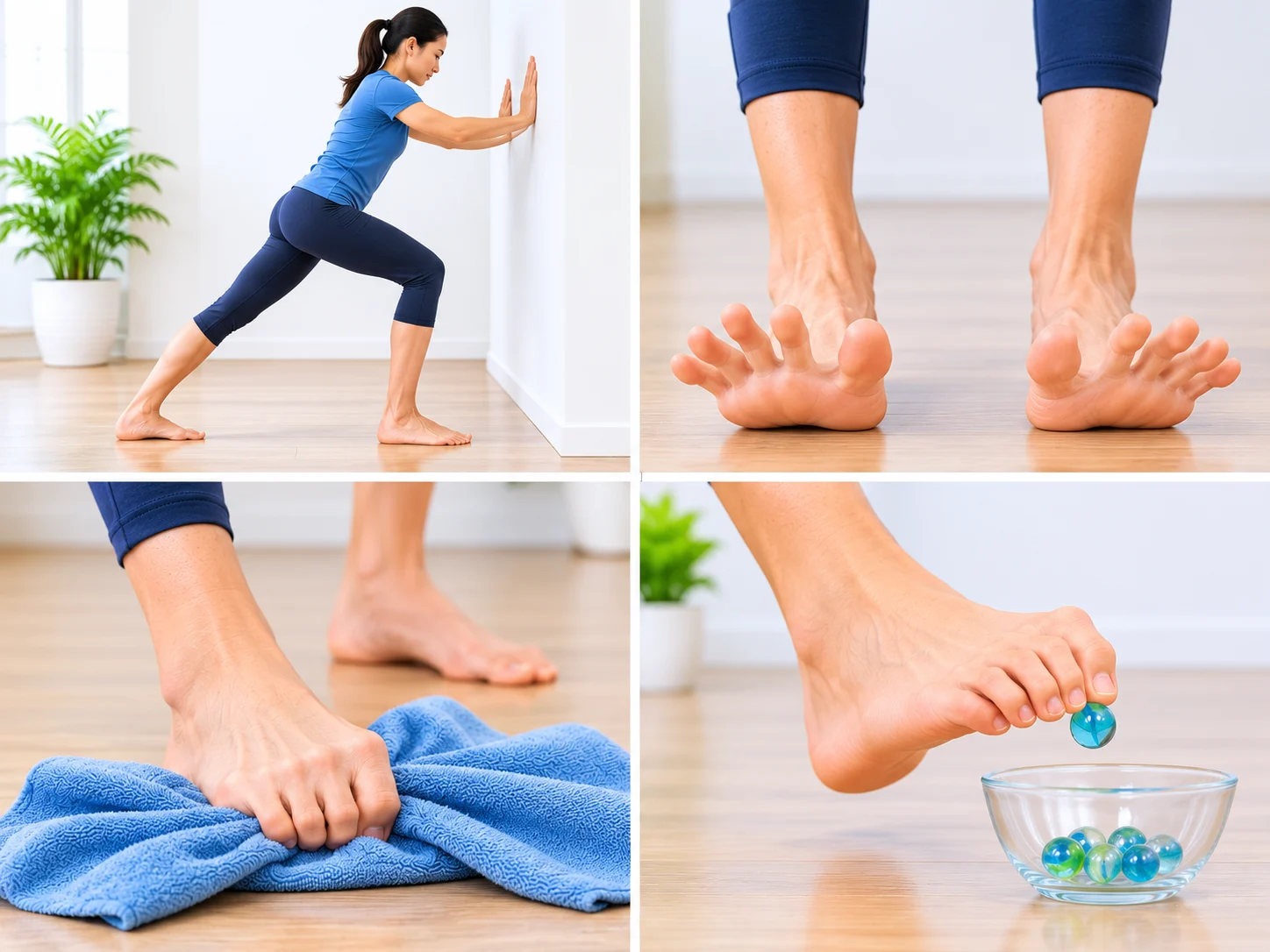
Metatarsalgia exercises that take five minutes
Keep discomfort mild and stop if the pain sharpens. If the pain still limits walking after a few weeks of these changes, book an assessment.
- Calf stretch: Hands on a wall, one foot back, heel down, knee straight. Hold 30 seconds, three times per side.=
- Toe spreading: Lift your toes, then spread them wide. Hold five seconds, 10 times.
- Towel scrunch: Curl your toes to pull a small towel toward you, 10 times.
- Marble pick-up: Lift marbles into a bowl using only your toes.
When home care stops being enough
Arrange a review soon if you notice any of these:
- Sudden, severe pain after a jump, fall or heavy impact
- Difficulty putting weight through the foot
- Swelling, bruising or a visible change in a toe’s position
- Numbness, or burning that spreads through the toes
- Redness, warmth, an open sore or fever
Where specialist care changes the plan for ball of foot pain
A foot and ankle assessment looks at how you stand and walk, how far your ankle bends, and where each metatarsal head and toe is tender. Imaging follows when it adds answers. Digital radiography and 3D imaging are part of the diagnostic toolkit at OrthofootMD. The findings help determine the appropriate metatarsalgia assessment and treatment approach, particularly when footwear changes and other conservative measures have not relieved the pain.
Dr Gowreeson Thevendran is a triple-fellowship-trained orthopaedic and trauma surgeon who focuses on foot and ankle conditions. He consults at Mount Alvernia Hospital and Mount Elizabeth Novena Specialist Centre. Ball of foot pain stays vague until someone matches it to a cause. Once that happens, the plan usually becomes clear and practical. If every step is a reminder, schedule an assessment with our foot and ankle specialist.
FAQs
Metatarsalgia is the medical term for ball of foot pain. It describes pain under the metatarsal heads and covers several causes, including overload, nerve irritation, ligament damage and stress injuries. The label describes where it hurts. Treatment depends on why.
Barefoot walking on hard floors removes cushioning, so the fat pad and metatarsal heads absorb every step. A thinning fat pad, tight calves or toe deformities make this worse. Cushioned indoor footwear often eases the pain within days.
Yes. A tight calf limits ankle bend, so the forefoot takes more load during each step. Calf stretching is a standard part of metatarsalgia treatment for this reason. Compare both sides with the knee-to-wall check above.
Many people find relief, because the pad spreads pressure away from the sore heads. Position matters. The pad sits just behind the painful spot, and one placed under it can add pressure. A specialist can review the fit and the cause.
Usually with changes. Cut distance, avoid hills and jumping drills, and add cycling or swimming. Stop running if you can point to one tender spot or notice swelling, since a stress fracture needs assessment first.
Overload from footwear or a training spike often settles over several weeks once the trigger changes. Structural causes such as bunions or ligament tears usually persist until treated. Pain beyond a few weeks deserves assessment.
Yes. A bunion shifts the big toe off its normal line, so it carries less weight at push-off. The neighbouring metatarsal heads absorb the extra pressure. Treating the bunion, or supporting the foot, often reduces the forefoot pain that follows.
Book a review if pain lasts more than a few weeks, keeps returning, or limits walking and sport. Sooner is better with numbness, swelling, a changed toe position, an injury or diabetes.
Yes. A raised heel tips your body weight forward, so the metatarsal heads carry more load with every step. Narrow toe boxes add squeeze. Lower, wider shoes ease that pressure, and keeping heels for short occasions helps while the forefoot settles.
Check where it hurts. Plantar fasciitis usually sits at the heel or along the arch, often worst with the first steps after resting. Pain under the toe joints that builds with standing and push-off points to the forefoot. Tight calves can contribute to both, so the two sometimes appear together.