Bunion vs Bunionette (Tailor’s Bunion): What’s the Difference?
September 29, 2026
What Causes Claw Toes and How Are They Treated?
October 13, 2026
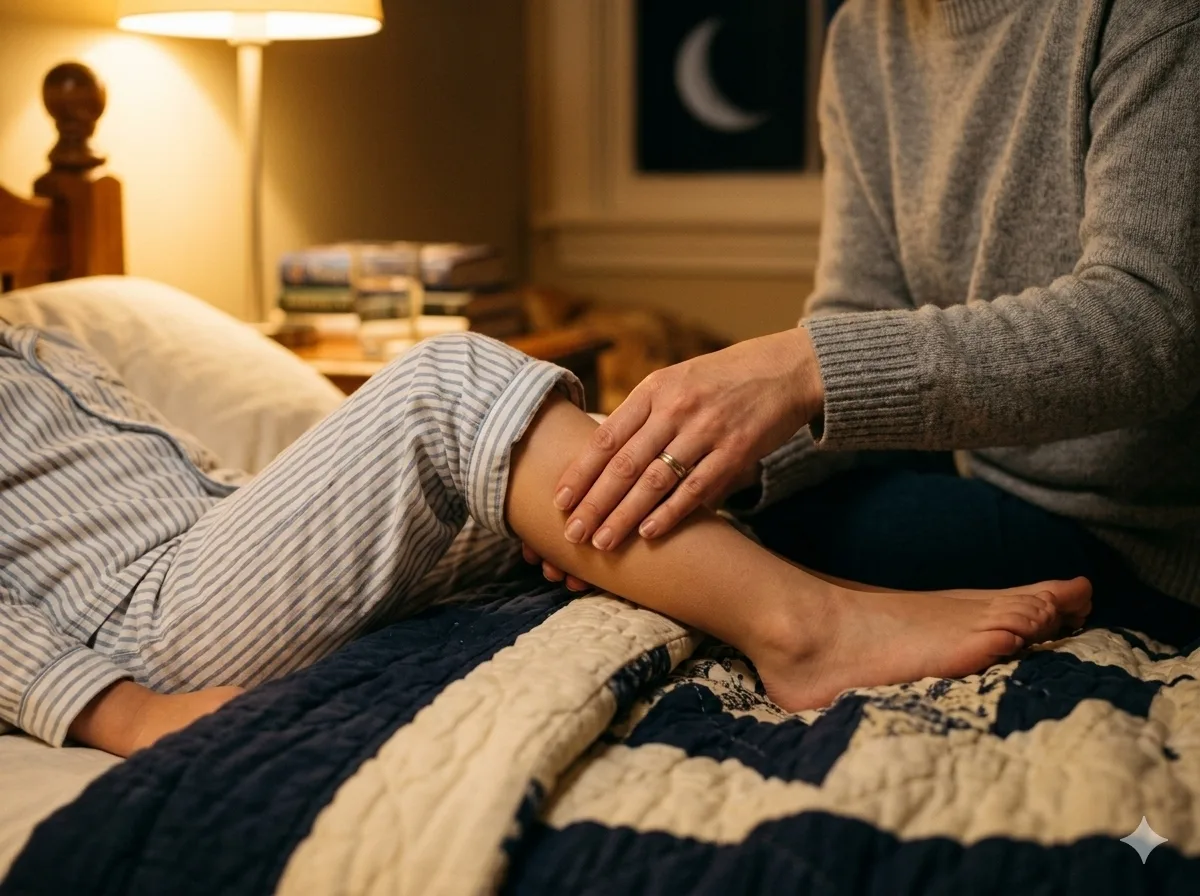
It’s just past 2am. A small hand tugs at your arm, and your four-year-old is standing by the bed in tears, holding his right leg. He points to his knee, then his calf, then back to his knee.
The skin looks normal and the knee bends easily. A warm hand on his leg settles him, and by breakfast he’s racing around the flat. Then, three nights later, it happens again. Same leg. Same spot.
If this sounds like your home. Child leg pain at night is a very common worry for parents, and it usually has a simple, harmless cause. The key is knowing which patterns are reassuring and which deserve a closer look.
Child leg pain at night is often caused by growing pains. These typically affect both legs, sit in the muscles of the thighs, calves or behind the knees, and are gone by morning. Pain that stays in one leg, comes with fever, swelling or a limp, or carries on into the day should be checked by a doctor.
What Do Growing Pains Usually Look Like?
The classic signs include:
- An ache or cramp in both legs, felt in the thighs, calves, shins or behind the knees
- Pain that starts in the late afternoon, evening or during the night
- A child who wakes up happy, walks normally and runs around the next day
- Joints that look normal, with no redness, swelling or warmth
Busy days often seem to bring on child leg pain at night. A long session at the playground or a weekend of running around East Coast Park can show up as aches at bedtime.
Growing Pains or Something Else? A Side-by-Side Guide
| What you notice | Typical of growing pains | Worth a doctor’s check |
| Which legs | Both legs, or switching sides | The same leg every time |
| Where it hurts | Muscles of the thighs, calves or behind the knees | A joint, or one exact spot on a bone |
| When it happens | Evening or night | During the day, or first thing in the morning |
| The next morning | Walking and playing normally | Limping, stiff or reluctant to walk |
| How the leg looks | Normal | Swollen, red, warm or bruised |
| General health | Well, eating and active | Fever, tiredness or weight loss |
Growing Pains in One Leg: Is That Still Normal?
Sometimes, yes. Growing pains can favour one side on a given night, then switch to the other leg a few nights later.
But a pattern matters more than a single episode. A 4-year-old complaining of leg pain in one leg at night, every night, in the same spot, is giving you useful information. Pain that keeps returning to one place suggests something local is going on in that leg.
That “something” is usually minor, such as a bruise from an unseen fall or a strained muscle. Still, persistent growing pains in one leg are a sound reason to book a doctor’s visit.
Toddler Leg Pain at Night: What’s Different for Younger Children?
Toddlers often show you what hurts through their actions.
With toddler leg pain at night, watch for daytime clues as well:
- Refusing to stand or walk, or wanting to be carried everywhere
- Going back to crawling after they’ve learnt to walk
- A new limp, or holding one leg stiffly
Toddlers fall constantly, and many falls go unwitnessed. A small twisting fall can cause a fine crack in the shin bone, sometimes called a “toddler’s fracture”. It may barely show on a first X-ray, so a doctor may want to examine your child again or repeat imaging if pain continues.
Another common cause in young children is an irritable hip (transient synovitis). This short-lived hip inflammation often follows a cold and usually settles within a week or two. A doctor should still confirm it, because a hip infection can look similar early on.
Child Knee Pain at Night: When the Knee Is the Clue
Child knee pain at night is often part of the growing pains picture. Many children point to the area behind the knee when their legs ache.
From an orthopaedic point of view, though, the knee has one important twist. Hip problems in children often show up as knee pain. The nerves that supply the hip also supply the area around the knee. So a child may point to a sore knee when the real issue is in the hip.
This is why a careful assessment of child knee pain at night always includes the hip. Other knee-related causes include:
- Overuse in active children, especially those who play football, run or dance
- Pain where the thigh muscle attaches below the kneecap, common in older children during growth spurts
A swollen knee, daytime pain or a knee that locks or gives way needs a medical review.
Child Leg Pain and Fever: Why This it Matters
Child leg pain and fever together are a reason to see a doctor promptly, ideally the same day.
Fever is often a sign of infection. When it appears alongside pain in a leg or joint, doctors want to make sure an infection hasn’t settled in a bone (osteomyelitis) or a joint (septic arthritis). These infections are uncommon. They are also very treatable, and early treatment gives the best outcome.
Signs that need urgent attention include:
- Fever with a hot, red or swollen joint
- Refusing to put any weight on the leg
- A child who seems unusually unwell, drowsy or floppy
In Singapore, dengue is another cause of fever with aching muscles and joints. Any child with a fever and body aches should see a doctor, who can test for it.
A children’s emergency department is the right place for the urgent signs above, especially after hours. Trust your instincts here. You know when your child “isn’t themselves”.
The Night Pain is Light: A Self-Check for Child Leg Pain at Night
Use this simple guide to decide on your next step. It supports your own judgement and works alongside your doctor’s advice.
Green: watch and comfort at home
- Pain in both legs, in the muscles
- Evenings or night only
- Your child is well, active and walking normally by morning
Amber: book a visit with your GP or polyclinic doctor
Pain keeps returning to the same leg or the same spot
Night pain continuing for more than a few weeks
A mild limp, or pain that appears during the day as well
Red: seek same-day medical care
- Fever alongside leg or joint pain
- A red, warm or swollen joint
- Refusing to walk or bear weight
- Night sweats, weight loss, tiredness or unexplained bruising
Red signs need prompt attention. Serious causes are uncommon, and early investigation is the safest way to gain peace of mind.
Four Common Myths About Leg Pain in Children
Myth: Growing pains happen because the bones are growing fast.
Fact: The cause is still unclear. Growing pains often follow active days, and they can happen when a child isn’t in a growth spurt.
Myth: A limp is part of growing pains.
Fact: Children with growing pains walk normally the next day. A limp points to something else and deserves a doctor’s check.
Myth: Pain in one leg is just a child seeking attention.
Fact: Pain that wakes a child from sleep deserves to be taken seriously. Pain that returns to the same leg is a real signal worth recording.
Myth: Every case needs an X-ray.
Fact: A careful history and examination often give the answer. Imaging is used when the findings point to a specific cause.
Simple Ways to Comfort Your Child at Night
For green-light growing pains, a few home measures often help:
- Gentle massage of the thighs and calves
- Warmth, such as a warm bath before bed or a comfortably warm compress
- Light stretching of the calves and thigh muscles during the day
If you’re thinking about pain relief medicine, speak to your GP or pharmacist first. They can advise on the right medicine and dose for your child’s age and weight.
When Child Leg Pain at Night Needs a Closer Look
Child leg pain at night usually passes with time, comfort and sleep. Growing pains are real, and they’re harmless.
The patterns that matter are pain in one leg that keeps coming back, pain that lasts into the day, a limp and any pain alongside fever. If your child continues to experience leg pain, understanding what to do if your child is experiencing leg pain can help you recognise the next steps and determine when to seek medical advice.
If your child’s leg or knee pain fits the amber pattern, or you’d simply like reassurance, our team is here to help. For red signs, head to a children’s emergency department first. Schedule an assessment with our orthopaedic to understand what’s causing the pain and what to do next.
This article offers general information for parents. For advice about your own child, please speak with a doctor.
FAQs
Growing pains tend to come and go, with pain-free nights or weeks in between. Pain that wakes your child night after night for several weeks should be checked by a doctor.
Growing pains usually fade as children approach their teenage years. New leg pain in an older child or teenager has other common causes, such as sports overuse, and is worth assessing.
Yes. Aching muscles are common during viral illnesses. Some children develop sore calves and walk on tiptoes for a few days after flu. A doctor should check any child who refuses to walk or seems unwell.
Flexible flat feet are common in young children and are usually painless. A foot that is stiff, painful or getting worse should be assessed by a foot and ankle specialist, as the foot and lower leg work closely together.
A child with green-light growing pains can usually carry on with school and play as normal. Keep them home and see a doctor if they have a fever, a limp or pain during the day.