What Is Regenerative Medicine?
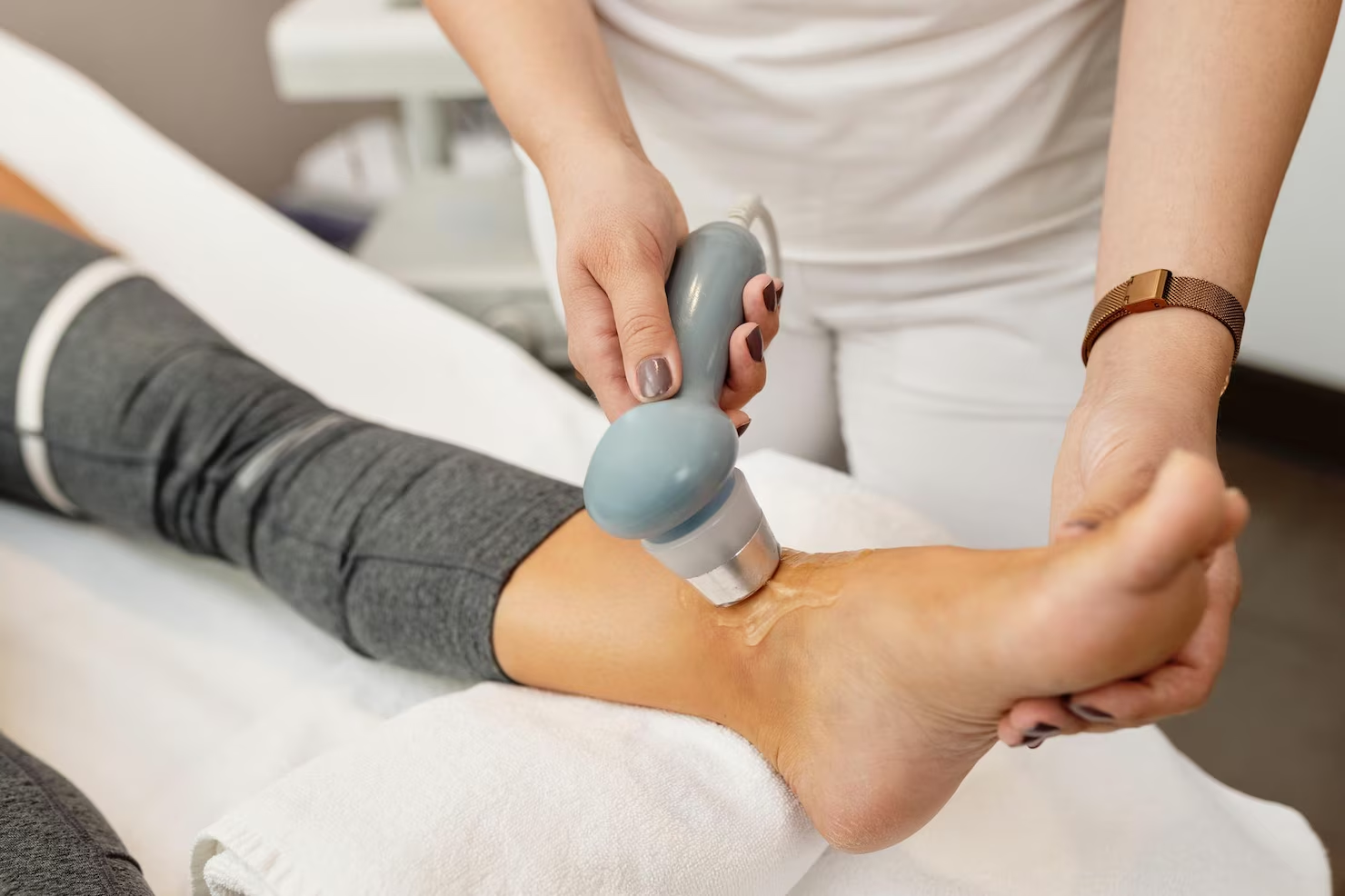
Regenerative medicine is a non-surgical treatment that supports your body’s natural healing processes to help reduce pain and improve joint function. At OrthofootMD, we use evidence-based therapies such as Platelet-Rich Plasma (PRP) injections for suitable patients with tendon injuries, ligament injuries, and early joint degeneration. By using concentrated platelets from your own blood, PRP delivers natural growth factors directly to the injured area to support tissue repair. As part of our Joint Longevity Programme, regenerative medicine helps preserve your natural joints and may delay the need for surgery in carefully selected patients.
Why Regenerative Orthopaedic Treatment Matters
Many patients assume their choices are “live with the pain” or “have surgery.” Regenerative orthopaedic treatment exists precisely because that’s rarely true.
Our PRP treatment Singapore programme helps you:

Reduce Inflammation and Pain

Support Natural Tissue Repair

Improve Joint and Tendon Function

Potentially Avoid Major Surgery
What to Expect from Your PRP Consultation
Every patient is unique. There is no single treatment that works for everyone, which is why your journey begins with a comprehensive assessment rather than a one-size-fits-all solution. During your consultation, our orthopaedic longevity specialist will evaluate multiple factors that influence your joint health, including:
Clinical Assessment
We start with your symptoms, injury history, activity level, and goals, so treatment is built around your joint, not a generic protocol.
The PRP Procedure
A small blood sample is processed, and the concentrated platelets are injected into the affected area.
Diagnostic Confirmation
Where appropriate, imaging such as ultrasound or MRI confirms the extent of tendon, ligament, or cartilage involvement before we recommend PRP over any other option.
Recovery and Follow-Up
Healing builds gradually over several weeks as the tissue repair process takes hold. We monitor your progress and adjust your broader treatment plan as needed.
Who Can Benefit from Regenerative Medicine?
Not every patient is a candidate. Regenerative medicine is recommended only after a full clinical assessment confirms it fits your diagnosis and goals.
Our programme is suitable for:
- Patients with Knee Osteoarthritis PRP injection for knee osteoarthritis can ease pain and may help delay knee replacement surgery for suitable candidates
- Athletes and Runners: PRP for tendon injury supports recovery from Achilles tendinopathy, plantar fasciitis, and patellar tendon pain
- Patients with Ligament Injuries: PRP for ligament injury is often considered when ankle sprains haven’t settled with physiotherapy alone
- Anyone Exploring Alternatives to Surgery: For patients seeking cartilage regeneration treatment Singapore offers before considering invasive procedures
Why Choose OrthofootMD for Regenerative Medicine in Singapore?
Choosing the right specialist is about more than treating pain—it is about finding a team that understands how to protect your mobility for years to come. At OrthofootMD, our Joint Longevity Programme is built around one clear objective: to help you maintain healthy, functional joints and continue living an active life for as long as possible.
Specialist Expertise
Evidence-Based, Honest Guidance
A Track Record of Innovation
Part of a Longer-Term Plan
FREQUENTLY ASKED QUESTIONS
How much does a PRP injection cost in Singapore?
Cost depends on the joint being treated, the number of sessions required, and whether imaging guidance is used. Your consultation will include a clear estimate specific to your treatment plan.
Does insurance cover PRP injections in Singapore?
PRP insurance coverage in Singapore varies by policy and by whether your condition qualifies as medically necessary. Some patients can use MediSave or an Integrated Shield Plan; others find it isn’t covered for certain conditions. Check directly with your insurer, or ask our clinic team to help you find out.
How much does stem cell therapy cost in Singapore?
Stem cell therapy for joint conditions is currently classified by Singapore’s Ministry of Health as investigational, and isn’t part of standard orthopaedic care outside approved clinical trials. Our regenerative medicine programme is built around PRP and biologic therapies, which have an established, MOH-recognised role in tendon and ligament treatment.
Is PRP injection safe?
PRP uses your own blood, so the risk profile is generally low compared with treatments using foreign substances. Mild swelling or soreness afterward is common. We’ll walk through the specific risks for your case at the consultation.
Is PRP approved in Singapore?
Yes. Singapore’s Ministry of Health permits PRP injections for ligament and tendon injuries, and it’s offered across the island’s private orthopaedic clinics.
PRP vs steroid injection: what's the difference?
Steroid injections reduce inflammation quickly but don’t repair tissue, and repeated use can weaken tendons over time. PRP works more slowly because it supports genuine tissue healing rather than just easing pain. Which one fits you depends on your condition and treatment history.
How long does PRP take to work?
Most patients notice gradual improvement over several weeks to a few months, as tissue repair builds. It isn’t an overnight fix. That’s the tradeoff for treating the cause rather than the symptom.
Protect Your Joints Before Surgery Becomes the Only Option
The earlier you explore regenerative medicine, the more options you keep on the table.