
What Is a Bunion (Hallux Valgus)?
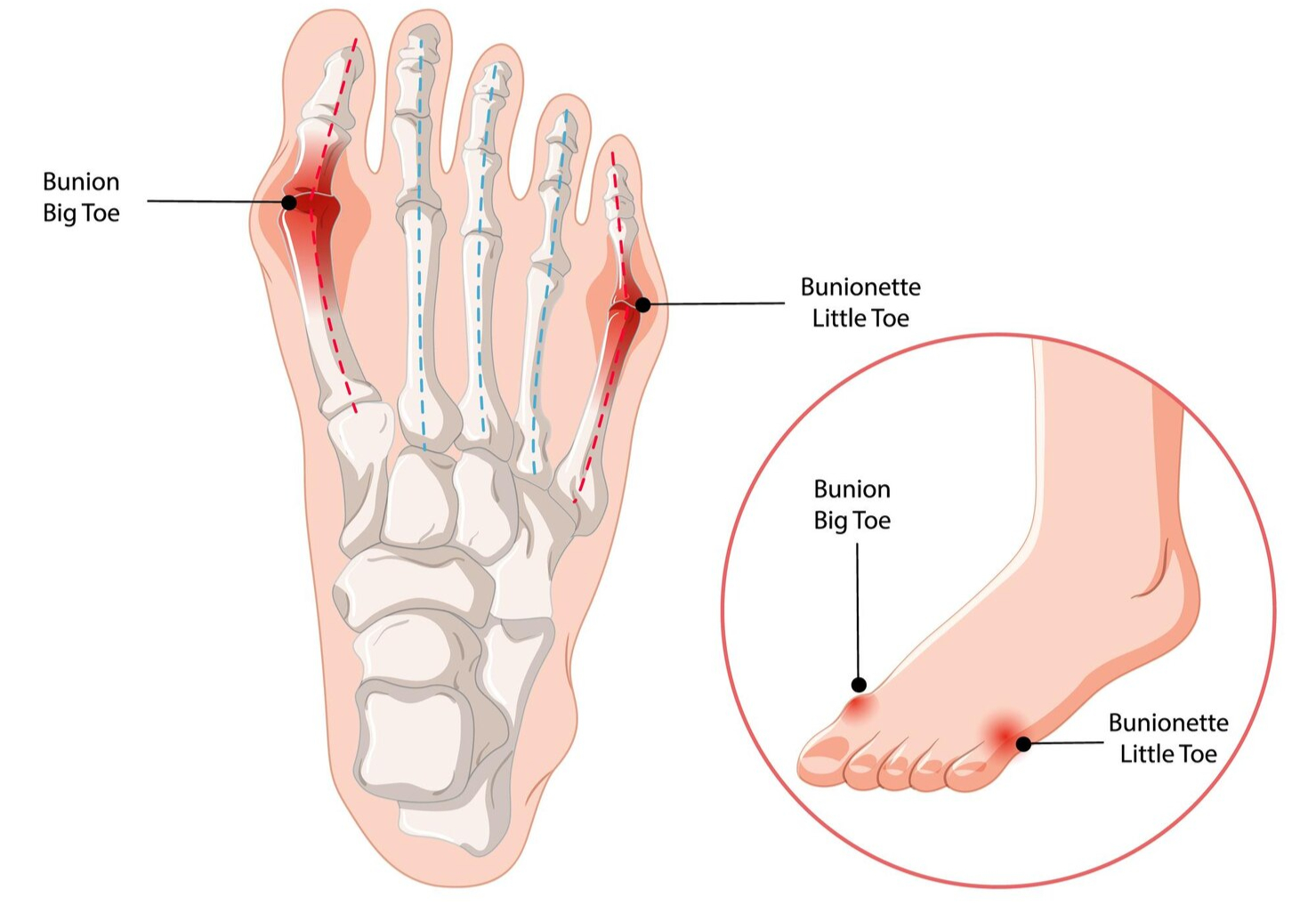
Hallux valgus is a progressive deformity in which the great toe deviates laterally toward the second toe, causing a medial prominence, the visible “bump”, to form at the first metatarsophalangeal (MTP) joint. It occurs more frequently in women than men. As the prominence enlarges, friction from footwear commonly triggers pain and inflammation, and the deformity can progress to affect alignment of the lesser toes over time.
Etiology varies between individuals; some patients have an inherited predisposition rooted in foot structure, while for others, biomechanical or external factors play a larger role. It is rarely attributable to a single cause.
In Singapore, this presentation is commonly seen among patients whose occupational or lifestyle footwear places sustained pressure on the forefoot: office and service staff in narrow, closed dress shoes for extended shifts, individuals who wear heeled footwear regularly for work, and F&B or hawker staff who spend long hours standing in footwear that offers little room for a widening joint.

Bunion Symptoms: How to Recognise the Signs
Common presenting symptoms include pain, tenderness, swelling, or erythema around the first MTP joint, particularly with footwear pressure over the prominence. A visible medial prominence at the base of the great toe, at the joint line, is typically the most obvious clinical sign.
Bunion symptoms can overlap with other conditions, including ganglion cysts, degenerative or inflammatory arthritis, and generalised forefoot misalignment. A differential diagnosis from an orthopaedic specialist helps confirm hallux valgus and rule out these alternatives.
What Causes Bunions to Develop?
Etiology is often multifactorial, but several contributing factors are widely recognised in clinical literature:
Inherited foot structure
A genetic predisposition toward hallux valgus-prone joint anatomy
Repetitive biomechanical stress or trauma
cumulative strain or a specific injury to the forefoot
Congenital foot deformities
structural anomalies present from birth that predispose to bunion formation
Inflammatory arthritis
conditions such as rheumatoid arthritis are associated with bunion development in some patients
Footwear
Narrow or high-heeled footwear can exacerbate symptoms, though footwear alone does not cause hallux valgus in the absence of underlying predisposition
Non-Surgical Bunion Care and Self-Management
Conservative management focuses on offloading pressure from the affected joint. This typically includes orthotic devices or padding, along with a transition to wider, low-pressure footwear that accommodates the prominence rather than compressing it. Left unmanaged, persistent friction against the enlarging prominence commonly leads to calluses and blisters, so footwear selection remains a relevant part of management throughout, not only at symptom onset.
Bunion Surgery Techniques
Minimally Invasive Bunion Correction
Minimally invasive bunion correction uses small incisions and specialised instruments to realign the bones of the big toe and correct the underlying deformity. Depending on the severity and characteristics of the bunion, the procedure may involve controlled bone cuts (osteotomies) to restore alignment while using internal fixation, such as screws, to maintain the correction during healing.
Compared with traditional open approaches, minimally invasive techniques use smaller incisions and aim to minimise disruption to the surrounding soft tissues. The specific technique and fixation method are selected based on the severity of the bunion, foot structure, joint alignment, and individual patient factors.
Choosing the Right Bunion Surgery Technique
Not every bunion requires the same surgical correction. Your orthopaedic foot and ankle specialist will assess the deformity clinically and with weight-bearing X-rays to determine the appropriate correction. Factors such as the degree of angular deformity, joint alignment, arthritis, and associated toe deformities may influence the surgical approach.
What Happens Before, During and After Bunion Surgery
Before Bunion Surgery
Your surgeon reviews your medical history, assesses your foot's osseous structure and gait, and typically orders radiographic imaging to evaluate the severity of the deformity before finalising a surgical plan.
During Bunion Surgery
Bunion correction is tailored to the severity and structure of the deformity. Where appropriate, minimally invasive bunion correction may be performed through small incisions using specialised instruments to realign the affected bones. Controlled bone cuts (osteotomies) may be used to correct the alignment, with screws or other internal fixation used to maintain the correction while the bone heals. The exact surgical technique is determined by your orthopaedic foot and ankle specialist based on your clinical assessment, X-rays, joint condition, and the characteristics of your bunion.
Anaesthesia for Bunion Surgery
Bunion surgery may be performed under general or regional anaesthesia, depending on the procedure. Your anaesthesia team will confirm the most appropriate option with you beforehand.
After Bunion Surgery
Patients typically spend a short period in the recovery room before discharge. A post-operative shoe or boot, along with dressings, protects the surgical site, and elevation helps manage swelling. Ambulatory aids such as crutches or a walker may be required for several days to weeks while weight-bearing is gradually reintroduced.
Recovery After Bunion Surgery: What to Expect
Recovery timelines vary based on the surgical technique used, extent of correction required, any concurrent procedures, and individual healing capacity.
Patients typically progress through a period of protected weight-bearing in a post-operative shoe or boot before gradually resuming full weight-bearing. Physiotherapy is frequently recommended to restore range of motion and reduce joint stiffness.
Return to work, exercise, and sport should be staged and supervised by your surgeon or physiotherapist rather than self-directed. Complete functional restoration of the joint can take several months, so a gradual, guided approach is essential to a successful outcome.
Who Is a Candidate for Bunion Surgery?
Bunion surgery may be indicated for patients presenting with:
- Need for revision surgery following a prior bunion procedure
- A deformity significant enough to alter gait or standing posture
- Ongoing pain, inflammation, or restricted range of motion at the MTP joint
- Symptoms limiting activities of daily living, exercise, or sport
- Associated conditions such as hammer toe, calluses, or blisters
- Persistent bunion pain unresponsive to footwear modification and orthotic devices
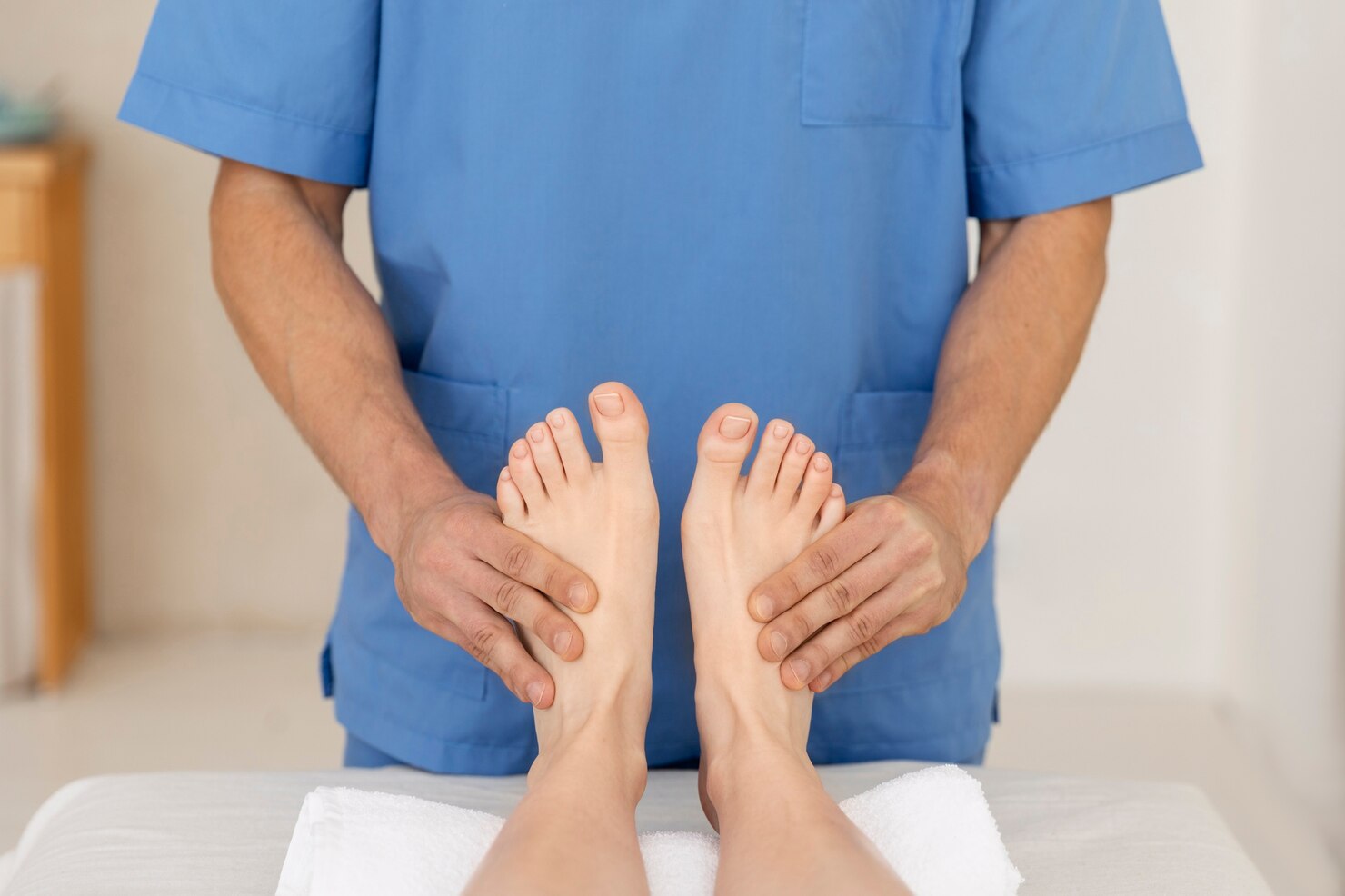
Surgical candidacy is determined through a comprehensive orthopaedic assessment, factoring in your symptoms, clinical and radiographic findings, joint condition, associated pathology, and response to prior conservative treatment.

About Your Orthopaedic Specialist
Dr. Gowreeson Thevendran
MBChB (Bristol) · MRCS.Ed · Dip. Sports Med.Ed · FRCS.Ed (Trauma & Ortho.) · FAMS (Singapore)
Dr Thevendran’s practice covers lower limb orthopaedic conditions, along with trauma and fracture surgery across both the upper and lower limbs. He trained in medicine at the University of Bristol, followed by surgical training in the UK and Canada.
Before moving into private practice, he headed Foot & Ankle Surgery within the Department of Orthopaedics at Tan Tock Seng Hospital, Singapore.
Questions patients ask
FAQs
What Happens If a Bunion Is Left Untreated?
Untreated hallux valgus tends to progress, becoming increasingly painful and limiting footwear tolerance, ambulation, and joint range of motion. Associated complications can include bursitis, calluses, blisters, hammer toe, and metatarsalgia.
Can a Bunion Come Back After Surgery?
Adherence to post-operative instructions, appropriate footwear, and completion of rehabilitation help protect the surgical correction and reduce recurrence risk. However, recurrence can still occur in some patients, particularly where genetic predisposition is a driving factor.
What Are the Risks of Bunion Surgery?
Surgical risks include infection, nerve injury, excessive swelling, delayed or incomplete bone or wound healing, stiffness of the first MTP joint, and the possibility of deformity recurrence. These risks should be discussed with your surgeon prior to the procedure.
How Long Does Bunion Surgery Take?
Most bunion procedures take approximately one to two hours and can often be performed as ambulatory (day) surgery. Operative duration and discharge planning depend on deformity complexity, the technique performed, and overall patient health.
Book a Bunion Assessment in Singapore
If bunion pain persists or continues to limit your daily activities despite conservative management, an orthopaedic assessment can determine the most appropriate treatment pathway.